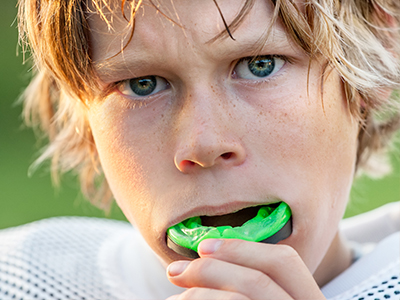
Sports-related collisions and impacts are a common cause of dental and facial injuries—ranging from chipped or knocked-out teeth to cuts of the lips and soft tissues, and even jaw fractures. For athletes at every level, a properly fitted mouthguard is one of the simplest, most effective ways to reduce the likelihood and severity of these injuries. Wearing a mouthguard can absorb and distribute the forces of an impact, helping to protect teeth, gums, the jaw joint, and delicate oral tissues.
Beyond preventing immediate trauma, mouthguards also reduce the chances of costly and invasive dental care down the road. Avoiding a fractured tooth or an avulsion (a tooth knocked completely out) preserves long-term oral health and can spare patients from complex restorative procedures. For young athletes whose facial bones and teeth are still developing, protective gear plays an especially important role in safeguarding growth and preventing complications that might affect bite or tooth alignment.
Importantly, mouthguards are recommended for a wide range of activities—not just high-contact sports. Any pastime where falls, errant projectiles, or body contact are possible carries some risk to the mouth. From organized competition to neighborhood pickup games, consistent use of a well-fitting mouthguard dramatically lowers the odds of a preventable dental emergency.
There are three main categories of mouthguards available to athletes: ready-to-wear stock models, boil-and-bite appliances, and custom mouthguards fabricated by a dental professional. Stock mouthguards are inexpensive and can be purchased at sporting goods stores, but they often fit poorly and may interfere with breathing or speaking. Boil-and-bite guards offer a better fit than stock options because they are softened in hot water and then shaped to the teeth, yet their fit and material quality can still vary significantly.
Custom mouthguards are made from impressions or digital scans of an individual’s teeth and are crafted in a dental lab or on-site using superior materials. Because they are tailored to the patient’s mouth, these guards provide the best balance of comfort, retention, and protection. They sit closely against the teeth without excessive bulk, which helps athletes breathe and communicate more naturally while maintaining high levels of safety.
For patients with braces or other orthodontic appliances, mouthguard selection requires extra consideration. Brackets, wires, and exposed tooth surfaces increase the risk of soft tissue injury; a custom mouthguard can be designed with additional space or protective features to accommodate orthodontic hardware. Similarly, those with extensive dental restorations may benefit from specialized designs that provide broader coverage and distribute impact forces more evenly.
While cost and convenience often influence a buyer’s decision, the primary goal should be protection and consistent use. The best mouthguard is the one an athlete will wear every time they participate in a risky activity, and for many patients that ends up being a custom device because of its superior fit and comfort.
A custom mouthguard appointment is straightforward and patient-friendly. The process typically begins with an evaluation of the patient’s oral health and a discussion about the sport or activities involved—information that helps your dentist recommend the most appropriate design and material. Traditional impressions or modern digital scans are used to capture the exact shape of your teeth and bite, enabling precise fabrication that minimizes movement and improves comfort.
Material choices for custom mouthguards vary, but most high-quality guards are made from durable, shock-absorbing thermoplastics layered for strength and flexibility. These materials are selected to provide a balance between protection and low bulk, so the guard feels natural in the mouth while still offering robust impact resistance. The finished appliance is trimmed and polished to eliminate rough edges and tested for proper fit before the patient leaves the office.
After fitting, the dentist will check how the guard aligns with the bite and make any necessary adjustments. Patients are instructed on proper insertion and removal, as well as how to inspect the guard for wear. Follow-up visits are often recommended to confirm continued fit—especially for children and teens whose mouths change rapidly—and adjustments can be made if needed to ensure ongoing protection.
Different sports and positions carry varying levels of risk, and that should inform your mouthguard choice. High-contact sports such as football, hockey, lacrosse, and boxing demand the greatest level of protection, while activities like basketball, gymnastics, and mountain biking still present meaningful risk that warrants protective gear. Consider not just the sport but also the athlete’s role—players who experience frequent collisions or risk from projectiles may need thicker or multi-layer designs.
Age and development are also important. Young athletes require guards that accommodate growth and mixed dentition (a mix of baby and permanent teeth). In many cases, a custom guard with room for changes or a replacement schedule timed to developmental milestones provides the best balance of fit and protection. Adult patients, particularly those with dental restorations or missing teeth, may need tailored designs to prevent forces from concentrating on vulnerable areas.
Coaches, parents, and athletes should also weigh practical considerations like comfort and ease of breathing. If a mouthguard makes it hard to breathe or speak, athletes are less likely to wear it consistently. That is another reason custom mouthguards are often recommended: they can be designed to offer protection while preserving airflow and speech clarity so that athletes can perform without distraction.
Proper care extends the life and effectiveness of a mouthguard. Rinse the appliance with cool water after each use and store it in a ventilated, protective container to prevent bacterial growth. Avoid leaving a mouthguard in direct sunlight or a hot car, as high temperatures can deform thermoplastic materials. Periodic cleaning with a toothbrush and mild soap—or specialized cleaning tablets recommended by your dental team—helps remove debris and maintain hygiene.
Inspect your mouthguard frequently for signs of wear: cracks, thinning, persistent odors, or a loose fit indicate it’s time for replacement. For athletes in growing stages, especially children and teenagers, periodic replacement is expected as dental arches and facial structure change. Even with careful maintenance, materials will eventually degrade, and worn guards lose their shock-absorbing capabilities.
If you notice changes in fit, discomfort, or any damage, schedule an evaluation with your dentist. A professional assessment can determine whether a simple adjustment will restore fit or if a new custom appliance is warranted. Regular checks also let your dental team verify that the mouthguard continues to meet the athlete’s current needs and make recommendations aligned with evolving dental conditions or sports participation levels.
Wrap-up: A mouthguard is a practical, effective step toward protecting teeth, oral tissues, and long-term dental health during sports and recreational activities. For tailored protection and superior comfort, many patients choose a custom appliance made by their dental team. To learn more about options and what to expect from a custom fitting, please contact the office of Whitesburg Dental Design for additional information and guidance.


Sports-related collisions and impacts are a common cause of dental and facial injuries, from chipped or knocked-out teeth to soft tissue lacerations and jaw trauma. A properly fitted mouthguard absorbs and disperses the forces of an impact, reducing the likelihood of direct tooth and tissue damage. By cushioning blows to the mouth, a guard protects teeth, gums, the temporomandibular joint, and surrounding oral structures.
Beyond preventing immediate trauma, consistent use of a mouthguard helps avoid invasive restorative care and complex procedures later on. For growing athletes, protective appliances also safeguard developing dental arches and tooth alignment during critical stages of facial growth. Because many injuries are preventable, making a well-fitting guard part of routine sports gear significantly lowers the odds of a dental emergency.
Mouthguards come in three main types: stock, boil-and-bite, and custom devices tailored by a dental professional. Stock guards are inexpensive and ready to wear but often fit poorly, which can impede breathing and speaking. Boil-and-bite models offer an intermediate fit by molding material to the teeth, but their fit and material quality can vary.
Custom mouthguards are fabricated from impressions or digital scans and provide superior retention, comfort, and protection due to precise contours and appropriate bulk. They are particularly useful for athletes who need to breathe and communicate without interference or who have unique dental anatomy or restorations. Ultimately, the best option is the one an athlete will wear consistently, so fit and comfort are key considerations.
A custom mouthguard appointment begins with an oral evaluation and a discussion about the athlete’s sport, position, and any dental restorations or orthodontic appliances. Your dentist will take impressions or a digital scan to capture the exact shape of the teeth and bite, which supports precise fabrication. These records are used to create a lab-crafted or on-site appliance from layered, shock-absorbing thermoplastics designed for both protection and low bulk.
At the follow-up visit the guard is trimmed, polished, and checked for proper fit, occlusion, and comfort, with adjustments made as needed to prevent rubbing or interference. Patients receive instructions on insertion, removal, and how to inspect the appliance for wear or damage, and periodic checks are recommended especially for younger athletes. The office of Whitesburg Dental Design uses modern scanning and fabrication workflows to streamline fittings while ensuring that each guard meets the athlete’s functional needs.
Mouthguards are designed primarily to protect teeth, gums, and soft tissues, and they can reduce the force transmitted to the jaw during impact. Research is mixed about whether mouthguards significantly lower concussion risk, and no mouthguard can guarantee concussion prevention. Because concussions involve rapid head acceleration and brain movement, protective helmets and adherence to safety protocols remain the primary methods to reduce that risk.
A mouthguard still plays an important role in preventing secondary oral injuries such as tooth avulsion, fractures, and soft tissue lacerations that can complicate recovery. Using a mouthguard in combination with sport-specific protective equipment and safe play techniques offers the best overall approach to reduce both dental and cranial injury potential. Athletes and coaches should treat mouthguards as one element of a broader safety strategy rather than a standalone solution.
High-contact sports such as football, hockey, lacrosse, and boxing carry the highest risk of oral injury and strongly warrant mouthguard use. However, many noncontact activities like basketball, gymnastics, skateboarding, and mountain biking also present fall or projectile risks that can injure the mouth. Position and role matter too; players who experience frequent collisions or are exposed to errant equipment may need more protective designs.
Coaches, parents, and athletes should evaluate both the sport and the athlete’s typical exposure when deciding on mouthguard use and features. If breathing, communication, or range of motion are concerns, a custom device can often preserve performance while providing protection. Prioritizing consistent wear across practices and games is essential to realize the preventive benefits of any mouthguard.
Rinse the mouthguard with cool water after each use and store it in a ventilated, protective case to reduce bacterial growth and deformation. Avoid exposing the appliance to high heat, such as direct sunlight or a hot car, since thermoplastic materials can warp under temperature extremes. Regular cleaning with a soft toothbrush and mild soap or with dentist-recommended cleaning tablets helps remove debris and odors without damaging the material.
Inspect the guard frequently for cracks, thinning, persistent odors, or changes in fit, and discontinue use if you notice significant damage. If the guard becomes loose, uncomfortable, or shows visible wear, schedule an evaluation with your dentist to determine if adjustment or replacement is needed. Proper care and storage extend service life and maintain protective performance between professional checks.
Replacement frequency depends on the athlete’s age, growth, and the amount of wear the device experiences during use. Children and teenagers often require new guards more frequently because dental arches and tooth positions change as they grow. Adults should replace a guard that shows wear, deformation, or any decline in retention even if there are no visible cracks.
A single significant impact can compromise a guard’s shock-absorbing ability even when surface damage is not obvious, so professional inspection after a hard blow is advisable. Routine dental appointments provide a convenient opportunity to verify fit and functional integrity and to schedule replacement when indicated. Keeping a record of when the guard was issued and when it is reviewed helps ensure timely updates for continued protection.
Orthodontic appliances increase the likelihood of soft tissue injury from brackets and wires, so choosing the right mouthguard is especially important during treatment. Custom guards can be designed with additional space or protective layers to accommodate brackets and reduce friction against the lips and cheeks. Boil-and-bite guards may offer temporary protection, but they can be uncomfortable or ineffective when substantial hardware is present.
During active orthodontic treatment your dentist and orthodontist should collaborate to select a guard that preserves both protection and appliance integrity. Some patients benefit from interim devices while teeth are moving, followed by a definitive custom guard once orthodontic treatment is complete. Regular monitoring ensures that the guard continues to fit properly and that it does not interfere with orthodontic progress.
Effective mouthguards balance shock absorption, durability, and low bulk through careful material selection and construction techniques. High-quality guards often use layered thermoplastics or elastomers that dissipate impact energy while maintaining a slim profile for comfort. A well-contoured fit, smooth margins, and secure retention features help keep the guard in place during play without restricting breathing.
Laboratory fabrication allows technicians to control thickness in specific areas, reinforcing zones that need extra protection while reducing material where bulk would impede function. Breathability and speech-friendly designs are also important performance factors, particularly for athletes who must communicate frequently on the field. Ask your dental provider about the materials used and how the appliance’s construction supports both protection and usability.
Team or league fittings are possible and can streamline the process of getting individualized protection for multiple athletes. A dental team can schedule group appointments to take impressions or digital scans, then coordinate laboratory fabrication and staggered fittings for final adjustments. Organizing players by age, mouth size, and orthodontic status helps ensure each athlete receives the appropriate design and fit.
If your organization is interested in team fittings, contact the office of Whitesburg Dental Design to discuss scheduling, logistics, and the clinical information we’ll need to provide safe, personalized mouthguards. We recommend coordinating with coaches or team managers to collect necessary consent and to minimize disruption to practice schedules. A clear plan for storage, labeling, and routine checks also helps teams maintain hygiene and effective protection throughout the season.
Ready to schedule your next dental appointment or have questions about our services?
Contacting Whitesburg Dental Design is easy! Our friendly staff is available to assist you with scheduling appointments, answering inquiries about treatment options, and addressing any concerns you may have. Whether you prefer to give us a call, send us an email, or fill out our convenient online contact form, we're here to help. Don't wait to take the first step towards achieving the smile of your dreams – reach out to us today and discover the difference personalized dental care can make.