Having a dental laboratory housed inside the dental practice changes how care is delivered. Instead of shipping cases off-site and waiting days for adjustments, work stays within a single facility where clinicians and technicians share the same priorities: fit, function, and aesthetics. This proximity lets the team respond quickly to clinical findings, refine shade and shape choices in real time, and preserve continuity from the first impression to the final delivery.
For patients, an in‑office lab often translates into fewer appointments and fewer surprises. Technicians who see the patient, the clinical photographs, and the working models firsthand can better interpret subtleties that matter most—bite relationships, tissue contours, and smile proportions. That deeper, face‑to‑face collaboration helps create restorations that behave like natural teeth and integrate smoothly with surrounding oral structures.
Beyond convenience, an on‑premises lab supports a practice culture of accountability and quality control. When fabrication happens under the same roof as treatment, adjustments are easier to coordinate, and the care team can quickly evaluate and correct any issues. The result is predictable outcomes that favor long‑term success rather than temporary fixes.
An in‑office lab empowers clinicians to offer a wide spectrum of restorations tailored to each patient’s needs, from conservative inlays and onlays to veneers, crowns, and multi‑unit bridges. Technicians work closely with dentists to interpret preparation geometry and occlusal dynamics, shaping each restoration to respect both function and aesthetics. That hands‑on craftsmanship matters most when matching natural translucency, texture, and color.
When it comes to removable prosthetics—partial and full dentures—the on‑site lab can fine‑tune fit and contour by evaluating the prosthesis directly in the chair and making rapid refinements. Prosthetic appliances, night guards, and other oral devices also benefit from immediate testing and modification, reducing the frustration of repeated returns or prolonged adjustments.
Repairs and replacements are another strength of an internal laboratory. Whether a crown chips, a denture fractures, or an appliance is lost, technicians familiar with the original case can recreate restorative work with greater fidelity. That institutional memory—records, materials used, original design choices—lets the team restore form and function efficiently while preserving the patient’s established occlusal scheme.
One of the most tangible advantages of an in‑office lab is the ability to expedite key steps in treatment. When fabrication and finishing occur on site, certain procedures can be completed in a single visit or within a much shorter interval than traditional workflows allow. For busy patients or complex restorative plans, fewer trips and predictable scheduling reduce disruption and support treatment completion.
Faster turnarounds also improve clinical decision‑making. If a shade needs adjustment or a margin requires refinement, the lab team can make those changes while the patient is present, rather than sending the case away and waiting for revisions. That immediacy minimizes provisional time and decreases the likelihood of prolonged provisional wear, which can compromise gingival health or occlusal stability over time.
Because scheduling is managed internally, the practice can coordinate lab hours with clinical availability for more efficient chairside verification. This internal coordination benefits both routine and complex treatments, enabling a smoother patient experience and allowing the clinical team to focus on accuracy rather than logistics.
High‑quality restorations are the outcome of good communication. In an on‑site laboratory, conversations between dentist and technician move beyond notes on a prescription and become collaborative design sessions. Facial photographs, digital scans, and shade maps are reviewed together, and nuanced decisions—like incisal edge length or gingival emergence—are agreed upon before final fabrication. That collaborative design reduces guesswork and increases the likelihood of first‑time success.
This close partnership also supports ongoing refinement of protocols. Technicians who regularly work with the clinical team develop a shared language and a reservoir of practical knowledge about the practice’s preferred materials and techniques. That institutional expertise allows the lab to anticipate clinical needs, recommend material selections for longevity, and suggest modifications that improve fit and patient comfort.
For the patient, this teamwork is invisible but impactful: it produces restorations that fit better, look more natural, and function reliably. The alignment between clinical intent and laboratory execution is a core reason why practices with on‑site labs often deliver superior restorative outcomes.
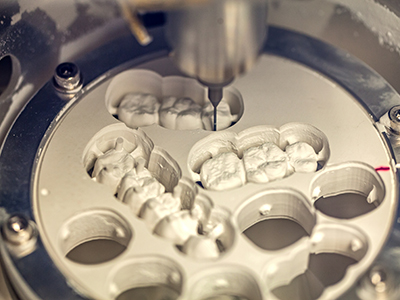
Modern on‑site laboratories combine traditional craftsmanship with digital tools to deliver consistent results. CAD/CAM systems, digital impressions, and high‑resolution milling equipment allow technicians to design and mill restorations with remarkable precision. When combined with hand‑finishing—staining, glazing, and surface texturing—the outcome is a restoration that balances the predictability of digital fabrication with the lifelike appearance achieved through artisanal finishing.
Quality control is integral to the process. On‑site labs maintain direct oversight of material selection and processing, from ceramics and composite materials to frameworks and denture base resins. Technicians can perform fit checks, occlusal verification, and shade assessments in the clinical environment, making final adjustments under conditions that mirror everyday use. This reduces variability and supports long‑term performance.
In addition to digital workflows, the presence of a laboratory encourages ongoing investment in equipment and training. The practice can more readily adopt innovations—new ceramic systems, improved bonding protocols, or updated milling strategies—because coordination between chairside and lab is seamless. That continual improvement benefits patients through better aesthetics, durability, and comfort.
Bringing laboratory capability into the dental practice elevates restorative care by combining technical skill, material science, and collaborative decision‑making. The office of Whitesburg Dental Design leverages these advantages to deliver restorations and appliances that prioritize fit, function, and natural appearance. If you’d like to learn more about how our in‑house lab supports your treatment options and timelines, please contact us for additional information.


An on-site dental lab is a fabrication space housed within the dental practice where technicians work alongside clinicians to design and finish restorations and oral appliances. Because the lab lives under the same roof as treatment, cases do not need to be shipped off to external facilities and communication between dentist and technician is direct and immediate. This arrangement preserves continuity from the initial impression or digital scan through final delivery, which often improves fit and aesthetics.
In practical terms, an in-house lab allows technicians to see clinical photos, models, and patients when needed, so they can interpret subtleties such as tissue contours and bite relationships. That face-to-face collaboration reduces guesswork and helps produce restorations that integrate smoothly with surrounding oral structures. The office of Whitesburg Dental Design leverages this model to streamline restorative workflows and prioritize predictable outcomes.
An in-office lab can significantly shorten turnaround times by eliminating the transit and external scheduling that often accompany off-site fabrication. When milling, finishing, and final adjustments occur on-site, certain restorations or appliances can be completed in a single visit or within a much shorter interval than traditional workflows. This is especially valuable for busy patients and for complex restorative plans that benefit from tighter coordination.
Faster turnarounds also improve clinical decision-making because technicians can make shade or margin adjustments while the patient is present. That immediacy reduces the time a patient spends in provisional restorations and lowers the risk of complications associated with prolonged provisional wear. Internal scheduling between clinical and lab staff further streamlines chairside verification and follow-up.
An on-site lab is capable of producing a wide range of restorations, including crowns, bridges, veneers, inlays, onlays, and complex multi-unit prosthetics. Removable prosthetics such as full and partial dentures, as well as appliances like night guards and sports mouthguards, can be fabricated and fine-tuned in the same facility. Technicians in an internal lab also handle implant restorations and custom frameworks that require precise adaptation to a patient’s occlusion.
Repairs and replacements are another strength of an in-house lab because technicians familiar with the original case and materials can recreate or restore work with greater fidelity. That institutional memory—detailed records of materials, design choices, and occlusal schemes—helps the team return a patient to function with fewer visits. The proximity of the lab supports both routine production and time-sensitive repairs with reliable consistency.
Collaboration in an on-site lab moves beyond written instructions to real-time design sessions where clinicians and technicians review facial photographs, digital scans, and shade maps together. Decisions about incisal length, gingival emergence, and material selection are discussed and agreed upon before final fabrication, which reduces guesswork and increases the likelihood of first-time success. This collaborative workflow creates a shared language and standardized protocols that benefit every case.
Over time, regular interaction builds institutional expertise: technicians learn the practice’s preferred materials and techniques while clinicians gain a deeper understanding of fabrication constraints and possibilities. That mutual familiarity allows the team to anticipate needs, recommend durable material choices, and refine preparation designs for improved long-term results. The tight feedback loop between chairside and lab supports continuous quality improvement.
Modern on-site labs combine digital tools like CAD/CAM design, digital impressions, and high-resolution milling with traditional hand-finishing techniques to achieve both precision and lifelike aesthetics. Digital workflows allow technicians to design and mill restorations with remarkable repeatability, while hand-staining, glazing, and surface texturing add the nuanced color and translucency that mimic natural teeth. This hybrid approach ensures restorations are accurate, durable, and visually convincing.
Digital records also simplify communication and remakes because design files, scans, and milling parameters can be archived and referenced for future adjustments or repairs. When needed, technicians can iterate quickly on a digital model and mill a revision the same day, reducing turnaround time and minimizing provisional wear. The result is a predictable fabrication process that still benefits from artisanal finishing.
Shade matching in an on-site lab is a multi-step process that typically combines clinical photography, in-person shade mapping, and digital color documentation to capture translucency, surface texture, and underlying tooth chroma. Technicians review photographs and, when appropriate, examine the patient or models directly to interpret subtle color variations that are difficult to convey on paper. This hands-on evaluation improves the likelihood of a seamless match with adjacent teeth.
Because the lab is present in the practice, technicians can perform chairside verification and make immediate adjustments to staining and characterization while the patient is available for feedback. Quick refinements reduce the need for remakes and help ensure the final restoration aligns with patient expectations. That immediacy is a distinguishing advantage of in-office fabrication.
Quality control in an in-house lab includes direct oversight of material selection, controlled processing environments, and systematic fit checks and occlusal verification before delivery. Technicians perform sequential inspections—evaluating margins, contacts, occlusion, and shade—under clinical conditions that mirror everyday function. These standardized checks reduce variability and improve long-term performance of the restoration.
Because the lab and clinical team operate together, any discrepancies can be resolved quickly through coordinated troubleshooting and immediate rework when necessary. Ongoing investment in equipment, training, and updated protocols is common in practices that maintain an internal lab, which helps sustain high standards and adopt new, evidence-based techniques. The integration of clinical and fabrication oversight creates predictable, repeatable outcomes.
Yes. Repairs and remakes are generally faster and more accurate when a technician who worked on the original case has access to the practice’s records, materials, and digital files. Familiarity with the initial design, porcelain characterization, or denture setup allows the lab to recreate or repair work with a high degree of fidelity. That continuity shortens turnaround and reduces the number of patient visits required for correction.
If a restoration chips or an appliance breaks, technicians can often assess and implement the repair on-site or prioritize the remake without the delays associated with off-site shipping. Quick access to original models, color maps, and milling parameters contributes to efficient restoration of form and function. For patients, this means less disruption and a clearer path back to comfortable use.
An in-house lab enhances patient communication by enabling chairside consultations that include technicians when appropriate, which helps demystify the fabrication process and set realistic expectations. Seeing a technician verify shade or try in a prosthesis reinforces transparency and gives patients an opportunity to provide immediate feedback. This direct interaction often leads to greater patient understanding and satisfaction with the final result.
Clearer communication also supports informed decision-making because clinicians and technicians can show options, explain material trade-offs, and demonstrate likely outcomes in real time. The ability to align clinical intent with laboratory execution reduces surprises and fosters trust in the treatment pathway. Patients benefit from a coordinated team approach that prioritizes predictable, comfortable results.
When a treatment plan involves lab-fabricated work, patients should expect appointments that may include digital scans, chairside try-ins, shade verification, or brief collaboration between the dentist and technician. These steps are intended to confirm fit, function, and aesthetics before final delivery, and they may reduce the need for later adjustments. Patients may also experience shorter overall treatment timelines compared with traditional off-site workflows.
Because the lab is integrated with clinical care, the practice can coordinate scheduling for efficient chairside verification and rapid refinements when necessary. Patients are encouraged to ask about material options, the expected number of appointments, and any chairside checks that will be part of their care. Whitesburg Dental Design’s on-site lab model aims to deliver restorations that are predictable, comfortable, and closely matched to each patient’s natural dentition.
Ready to schedule your next dental appointment or have questions about our services?
Contacting Whitesburg Dental Design is easy! Our friendly staff is available to assist you with scheduling appointments, answering inquiries about treatment options, and addressing any concerns you may have. Whether you prefer to give us a call, send us an email, or fill out our convenient online contact form, we're here to help. Don't wait to take the first step towards achieving the smile of your dreams – reach out to us today and discover the difference personalized dental care can make.