CEREC technology marries digital design with precision milling to produce ceramic restorations in a single appointment. For patients, that means fewer visits, no temporary crowns, and a final result that’s designed to match the contours and color of the surrounding teeth. The process is engineered to be efficient while maintaining the high standards expected of modern restorative care.
Beyond the convenience, same-day restorations reduce the time a prepared tooth is exposed, which can improve comfort and decrease the likelihood of sensitivity or complications between appointments. Clinically, delivering the final restoration at the chairside gives the dentist direct control over fit and aesthetics from start to finish.
This approach is particularly appealing for patients with busy schedules or those who prefer fewer office visits. It also supports predictable outcomes because the design, milling, and placement occur within a single, coordinated workflow.
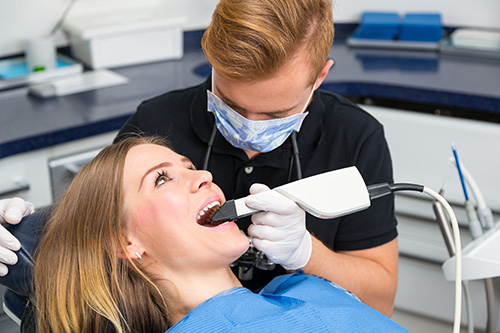
At the start of your visit the tooth is prepared and any decay or old material is removed with the same care used for traditional crown preparation. Instead of a physical impression, an intraoral scanner captures a detailed three-dimensional image of the prepared tooth and the surrounding bite. This gentle scanning method is fast and eliminates the need for impression trays and paste.
Once the digital scan is complete, the dentist uses intuitive CAD software to design a restoration that integrates with your bite and the natural shape of your teeth. You’ll benefit from real-time adjustments to shade and contour, helping achieve a seamless aesthetic. When the design is finalized, the file is sent directly to the in-office milling unit to fabricate the restoration from a high-strength ceramic block.
After the restoration is milled, the dentist will fine-tune the surface texture and polish to match adjacent teeth. The final step is bonding the ceramic restoration in place using proven adhesive techniques, then confirming fit, occlusion, and comfort before you leave. The result is a strong, lifelike restoration completed in a single, well-coordinated visit.
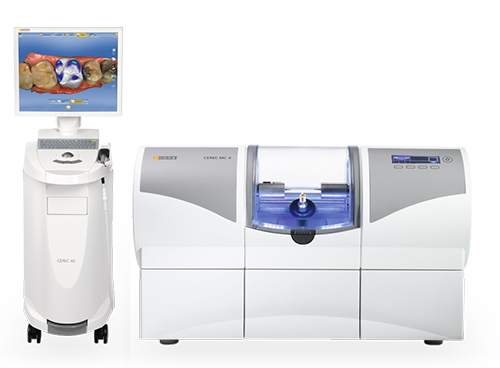
CEREC uses CAD/CAM (computer-aided design and computer-aided manufacturing) to translate a digital scan into a precisely crafted restoration. The software models the prepared tooth and surrounding anatomy, allowing the dentist to refine margins, contact points, and overall shape with a level of predictability that analog workflows can’t match.
Once the design is approved, the milling machine carves the restoration from a solid ceramic block using high-speed instruments under controlled conditions. The ceramic materials used are engineered for strength and long-term wear resistance while maintaining the translucency that gives a natural appearance. Because the restoration is produced in-office, the team can verify fit and make immediate adjustments if necessary.
From a clinical standpoint, this digital workflow reduces the cumulative errors that sometimes occur when multiple handoffs are required. The laboratory step is effectively integrated into the chairside process, producing consistent results and shortening the overall timeline from preparation to placement.
Patients often notice the difference in how well the restoration feels in the mouth: precise contacts, smooth margins, and a comfortable bite that contributes to long-term function and oral health.

CEREC restorations are milled from high-quality ceramic materials that combine strength with lifelike esthetics. These ceramics resist wear and stain reasonably well and are matched to surrounding teeth to provide a natural-looking finish. When properly designed and bonded, ceramic restorations can function reliably for many years.
Maintenance is straightforward: continue with daily brushing, flossing, and regular dental checkups to monitor the restoration and surrounding tissues. Routine professional cleanings and dental exams help catch small issues early and ensure the restoration remains a healthy part of your smile.
If a restoration ever requires attention, the digital files from the initial appointment can simplify future adjustments or remakes. Clinics that retain these digital records can reproduce or refine restorations with a high degree of consistency when the time comes.
Because ceramic responds well to modern bonding protocols, patients benefit from both an attractive appearance and a secure, comfortable fit that supports chewing efficiency and overall oral health.
CEREC is a versatile option for many restorative needs, including crowns, inlays, onlays, and certain veneer-type restorations. Ideal candidates are those with a need for a single definitive restoration, patients who prefer to limit multiple visits, or those who want to avoid temporary restorations. The dentist will evaluate overall oral health, bite dynamics, and the condition of the tooth to determine suitability.
Preparation for a CEREC visit is similar to other restorative appointments: discuss medical history, any sensitivity or previous dental work, and your aesthetic goals with the dentist beforehand. If there are concerns about bite alignment or complex medical conditions, the provider will account for these in treatment planning to ensure safety and predictability.
On the day of the procedure patients typically find the appointment efficient and comfortable. Because the workflow is digital and streamlined, chair time is focused and purposeful, and clinicians can often demonstrate the design and explain decisions during the visit so patients understand the choices made for their restoration.
When considering CEREC or any same-day restoration option, look for a practice that combines technical expertise with careful planning and conservative preparation. Experience with digital design software, attention to bonding protocols, and a commitment to aesthetic integration are key factors that influence long-term success.
It’s appropriate to ask about the types of ceramic materials used, how digital records are stored, and what follow-up care the practice recommends. A clear explanation of the workflow—from scanning to milling to bonding—helps set expectations and demonstrates a clinician’s familiarity with this technology.
At our practice, patients benefit from a team approach that values both precision and patient comfort. We focus on creating durable, visually pleasing restorations while maintaining the oral health principles that support lasting results.
CEREC brings together digital scanning, computer-aided design, and in-office milling to deliver ceramic restorations in a single appointment. The process is designed to reduce chair time, eliminate temporary restorations, and produce a final result that balances function and natural appearance. For many patients, this modern workflow provides a predictable and patient-friendly experience.
If you’re curious whether a same-day ceramic restoration is right for your situation, our team at Whitesburg Dental Design can evaluate your needs and walk you through the options. We prioritize careful planning and clear communication so you understand each step of the process.
Contact us to learn more about CEREC and whether it’s a good match for your restorative goals. We’re happy to answer questions and help you schedule an evaluation with one of our clinicians.


Today, there's no need to merely imagine how nice it would be to have a dental crown fabricated in a single visit. With CEREC technology and advanced systems of care, multiple trips to the dentist are a thing of the past! Now, one appointment is all it takes for our skilled and experienced dentist to design, fabricate, and place a naturally beautiful and long-lasting same-day crown. And, best of all, unlike conventional methods of care, you won't have to endure messy dental impressions, wear a temporary crown, or wait weeks for your permanent restoration to come back from the laboratory.
Offering a level of precision and comfort that exceeds conventional methods of care, CEREC technology is nothing short of amazing! Advanced CAD/CAM technology, which stands for computer-aided design and computer-aided manufacturing, enables our dentist to translate images from an optically scan tooth into a 3D virtual model upon which a custom crown can be digitally designed. Once this step is done, the detailed specs are then wirelessly transmitted to a chairside 3D milling machine to fabricate your new ceramic crown while you wait!
With conventional methods of care, a dental crown can take two to three visits to fabricate and place. However, thanks to the benefits of CEREC technology, we can prepare a tooth, then design, fabricate, and place your new crown, all while you wait.
With CEREC same-day crowns, there's none of the mess of conventional dental impressions, wearing dental temporaries, or waiting for the final crown to come back from the lab. Once the prepared tooth is optically scanned and the restoration digitally designed, your new crown can be milled from the highest quality of dental ceramics that very same visit.
CEREC same-day crowns and restorations are fabricated from the highest quality of dental ceramics. Because dental porcelain reflects light in much the same way as dental enamel, your new crown will look flawless, completely natural, and blend seamlessly with your smile.
A CEREC same-day crown offers much more than a convenient approach to getting a dental crown. It is also a high quality, naturally beautiful, extremely durable, and long-lasting dental restoration! The fact is, with proper oral hygiene and routine dental care your new crown will serve your smile well for many years to come.
CEREC is an in-office digital system that combines intraoral scanning, computer-aided design (CAD) and computer-aided manufacturing (CAM) to produce ceramic restorations in a single visit. The process begins with a 3D digital scan of the prepared tooth and surrounding bite, which creates an accurate virtual model for restoration design. The dentist uses CAD software to refine margins, contacts and contours before sending the final design to an on-site milling unit. The milling unit carves the restoration from a solid, tooth-colored ceramic block, producing a precise, high-strength restoration ready for finishing.
After milling, the restoration is characterized, polished and checked for fit and occlusion chairside. Proven adhesive protocols are used to bond the ceramic to the prepared tooth, restoring function and esthetics in the same appointment. Because design, fabrication and placement occur in a coordinated workflow, the clinician maintains direct control over fit and appearance throughout the procedure.
CEREC is commonly used for single-unit restorations such as crowns, inlays, onlays and veneer-type restorations that require precise marginal fit and esthetic integration. The system is particularly well suited to cases where a definitive restoration is preferred in one visit and where ceramic materials provide the desired strength and appearance. Some practices also use CEREC for certain small, fixed restorations that do not require complex lab staging. Larger restorative cases or multi-unit bridges may still require traditional laboratory workflows depending on case complexity and occlusal demands.
Clinicians evaluate each situation individually to determine whether a same-day digital workflow is appropriate and predictable. Treatment planning considers tooth structure, bite dynamics and the condition of adjacent teeth to ensure long-term function. When indicated, CEREC provides a conservative option that minimizes the time a prepared tooth remains exposed between appointments.
At the start of the appointment the tooth is prepared and any decay or old restorative material is removed using standard restorative techniques. An intraoral scanner then captures a detailed three-dimensional image of the preparation and opposing dentition, which allows the dentist to design the restoration on-screen with real-time adjustments for shape and contact points. Once the design is finalized, the file is sent to the in-office milling unit and the restoration is fabricated from a ceramic block while you remain in the operatory. After milling, the clinician refines the surface, matches texture and shade as needed, then bonds the restoration using contemporary adhesive protocols.
The overall appointment is typically focused and efficient because multiple steps that would normally require lab coordination are completed in one visit. Patients can watch the design process and ask questions during the appointment, which helps clarify clinical decisions. Finished restorations are checked for occlusion and comfort before you leave, reducing the need for immediate follow-up adjustments.
Digital scanning uses a handheld intraoral scanner to capture a precise 3D image of the prepared tooth and surrounding structures, eliminating the need for impression trays and impression paste. The digital model appears immediately on-screen, allowing the dentist to evaluate margins, contacts and occlusion in real time and to make adjustments before fabrication. This immediate feedback reduces the likelihood of remakes that can result from distorted or incomplete conventional impressions. The digital workflow also streamlines communication because the same file is used for design and milling without manual transfer steps.
For patients, digital scanning is often more comfortable and faster than traditional methods and can reduce chairside time spent waiting for material to set. From a clinical perspective, digital scans can improve reproducibility and reduce cumulative errors associated with multiple handoffs. Many practices retain digital records, which simplifies future adjustments or reproduction of restorations when needed.
CEREC restorations are typically milled from high-quality ceramic materials engineered for strength, wear resistance and lifelike translucency. Contemporary ceramics used in chairside milling combine mechanical durability with optical properties that mimic natural enamel, and when properly designed and bonded they can provide reliable function for many years. Longevity depends on restoration design, occlusal forces, patient habits and adherence to maintenance recommendations. Clinicians select specific ceramic blocks based on the restorative need, balancing strength and esthetic considerations for each case.
Proper adhesive bonding is essential to the long-term performance of ceramic restorations and helps distribute functional forces across the tooth structure. Routine dental exams and professional cleanings allow the dentist to monitor restoration margins and surrounding tissues and to address any wear or minor chipping early. Because the initial design and digital file are retained, reproducing or refining a restoration later can be more efficient than with traditional analog records.
Shade matching begins with the dentist selecting an appropriate ceramic block that approximates the natural tooth color and translucency, then fine-tuning the design in the CAD software to consider contour and thickness. Many systems allow on-screen shade references and adjustments for translucency and internal characterization to help mimic adjacent teeth. After milling, the clinician can apply stains, glazing and polishing techniques to enhance surface texture, luster and subtle color variations that contribute to a natural appearance. The combination of material selection, digital design and chairside finishing enables a high level of aesthetic control within a single appointment.
Final esthetic integration also depends on how the restoration harmonizes with neighboring teeth and the overall smile, so clinicians evaluate shade under appropriate lighting and make incremental adjustments as needed. When additional characterization is required, technicians or clinicians can refine surface effects during the same visit. This hands-on control minimizes the need for multiple shade remakes and supports predictable aesthetic outcomes.
Good candidates for CEREC are patients who need a single definitive restoration and prefer to minimize the number of dental visits, such as those requiring crowns, inlays or onlays. Ideal cases have sufficient remaining tooth structure for a bonded ceramic restoration and do not involve highly complex occlusal schemes or extensive multi-unit prosthetics that may require laboratory support. Patients with good overall oral health who can maintain hygiene and attend regular checkups are well suited to this approach. The dentist will also consider bite dynamics, tooth position and any history of bruxism when assessing suitability.
Some cases may still be better served by traditional laboratory workflows, including large-span bridges or restorative situations requiring specialized materials and laboratory techniques. A thorough clinical evaluation, including radiographs and bite assessment, helps determine whether a same-day CEREC restoration is the most predictable option. When appropriate, a same-day ceramic solution offers the advantages of speed, precision and a reduced need for provisional restorations.
Ensuring fit and occlusion starts with an accurate digital scan that captures clear margins and opposing contacts, followed by careful CAD design to refine the restoration’s shape and contact points. The milling process produces a restoration with tight tolerances, and clinicians routinely verify interproximal contacts and marginal adaptation immediately after milling. Adjustments to occlusion are made chairside using fine polishing and selective equilibration to achieve a comfortable bite and even force distribution. Adhesive bonding protocols then secure the restoration while preserving the designed fit.
Post-placement checks are important to confirm that the restoration functions harmoniously within the patient’s occlusion and to identify any high spots or contact discrepancies. Many clinicians will perform a follow-up review to ensure the restoration remains comfortable under normal function. The digital workflow reduces cumulative errors and allows immediate correction when minor refinements are needed.
Caring for a CEREC restoration follows the same basic principles as natural teeth: maintain thorough daily brushing and interdental cleaning, and attend regular dental exams and professional cleanings to monitor margins and surrounding gum health. Avoiding hard, brittle foods and minimizing parafunctional habits such as nail-biting or chewing ice helps protect ceramic restorations from chipping. If you have a history of grinding or heavy occlusal forces, the dentist may recommend a protective night guard or alternative strategies to reduce stress on the restoration.
Report any new sensitivity, discomfort or visible changes, such as chips or looseness, to your dental provider promptly so small issues can be managed early. Because many practices retain the original digital files, reproducing or refining a restoration can be more efficient if a remake is ever needed. Routine follow-up appointments give the clinician an opportunity to check occlusion, polish surfaces and reinforce home-care guidance for long-term success.
Determining whether CEREC is appropriate begins with a clinical evaluation that includes a review of medical and dental history, radiographic imaging and an assessment of bite and existing restorations. During this visit the dentist will discuss your restorative goals, examine the tooth structure and explain the advantages and limitations of a same-day digital approach compared with traditional laboratory workflows. This conversation helps set realistic expectations about esthetics, function and the anticipated clinical steps. Additional diagnostics, such as bite records or periodontal assessment, may be completed to confirm suitability.
The team at Whitesburg Dental Design can perform this evaluation, explain the CEREC workflow in detail and outline the recommended next steps tailored to your needs. Clear communication about materials, bonding protocols and follow-up care supports predictable outcomes and helps patients choose the approach that best aligns with their restorative goals. If CEREC is not the ideal choice, the clinician will explain alternative restorative options and why they may be preferable for your situation.
Ready to schedule your next dental appointment or have questions about our services?
Contacting Whitesburg Dental Design is easy! Our friendly staff is available to assist you with scheduling appointments, answering inquiries about treatment options, and addressing any concerns you may have. Whether you prefer to give us a call, send us an email, or fill out our convenient online contact form, we're here to help. Don't wait to take the first step towards achieving the smile of your dreams – reach out to us today and discover the difference personalized dental care can make.