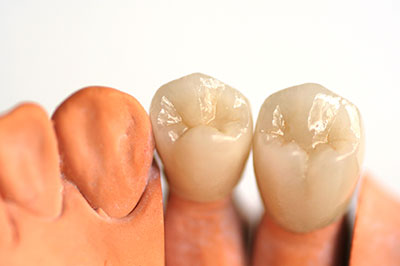
Once commonly referred to as, “porcelain jackets,” today’s all-ceramic crowns are fabricated from advanced generations of aesthetically appealing, lifelike materials affording strength and durability approaching that of tradition metal and porcelain fused to metal crowns (PFM).
When a tooth requires a full coverage restoration to rebuild its structural integrity and appearance, how good the crown will look and how well it will withstand the forces of oral function are major considerations in choosing the type of crown. In the past, only metal crowns or ones fabricated out of porcelain fused to an underlying substructure of metal offered the strength required to bite and chew without breaking. While porcelain fused to metal crowns to this day remain a popular choice for strong, attractive and long-lasting restorations to rebuild teeth that are damaged, decayed, misshapen, worn down, undersized, or have had a root canal procedure, there are some drawbacks. For one thing, the thin metal margin at the collar of a PFM crown may be visible at the gumline (especially in the presence of receding gums). Also, due to the presence of an underlying metal shell, porcelain fused to metal crowns do not come close to handling light in the same way as natural tooth structure or dental ceramics.
Advantages of Ceramic Crowns
While the trade off between appearance and strength used to mean that porcelain or all-ceramic crowns looked better but did not have the strength and durability of porcelain fused to metal crowns that is no longer the case. All-ceramic crowns are not only capable of producing incredibly lifelike results, but thanks to the range of materials available today, all-ceramic crowns are stronger and more reliable than ever before.
Some of the advantages of all-ceramic crowns include:
With the range of engineered dental ceramics available today, which material is selected for crown fabrication depends upon the location of the tooth, the stresses on that tooth and the esthetic requirements of the case. Certain all-ceramic crowns are more suited for back teeth, while others are able to fulfill the aesthetic requirements presented by a front tooth. Some of the all-ceramic crowns used today include Feldspathic porcelain crowns, Empress crowns, Procera crowns, Lava crowns, Zirconia crowns, and Emax crowns.

While a dental filling is designed to replace a portion of a decayed or damaged tooth, a dental crown offers full coverage to restore the tooth’s entire outer surface. A well-fitting dental crown not only protects and strengthens the underlying tooth structure, but it also restores the tooth’s appearance and function.
The procedure for getting an all-ceramic crown is much like the procedure for getting any other type of crown. In all cases, the tooth needs to be prepared, an impression taken, and a permanent crown cemented into place. A single all-ceramic crown can typically be fabricated over the course of two visits. However, with CAD/CAM technology, a same-day crown can be fabricated from start to finish in a single visit. With the first approach, a temporary crown is typically worn until the second visit, when the permanent restoration is placed. As with every treatment plan, our office will explain your best options in care.
As the name implies, a temporary crown is only worn for a short time until the permanent crown is placed. A temporary crown is typically fabricated from durable tooth-colored dental acrylics. While designed to protect the underlying tooth between appointments, and until your new permanent crown gets placed, a temporary crown is also fabricated to look like a natural tooth and maintain the look of your smile.
While you should feel better having an attractive and functional tooth to restore your smile, your tooth may feel a little sensitive following treatment. This initial sensitivity will subside. We take great care to make sure your new restoration looks great, fits well, and your bite is perfect. However, we’re always happy to make any minor adjustments to ensure your comfort.
With some exceptions, teeth with root canal procedures are typically restored and protected from further damage with a full-coverage crown. Based on what’s best for your smile, our office will recommend the most appropriate restoration to maintain the health and longevity of your tooth following a root canal procedure.
A dental crown is a long-term restoration that, if properly cared for, can serve you well for many years to come. Once your new crown is placed, it requires the same brushing, flossing, and periodic checkups as your natural teeth. Avoid biting your fingernails and chewing on hard or sticky objects such as ice, pencils, or taffy, which can damage or loosen your crown. Remember, clenching and grinding your teeth puts excessive pressure on both natural teeth and dental restorations. Unless treated, this habit can compromise the longevity and integrity of your dental work, including crowns.
Although your new all-ceramic crown restores the tooth's strength, form, and function, you can still develop dental disease in the absence of proper care. To prevent gum disease and tooth decay, it’s essential to brush and floss as instructed and see our office for routine checkups, cleanings, and care.
How long a dental crown lasts depends on various factors, including your level of oral care, diet, and oral habits. While the standard answer is that dental crowns can last anywhere from 5 to 15 years, existing literature confirms that most dental crowns remain in place at 15 to 20 years.
At the office of Whitesburg Dental Design, we strive to provide the highest quality of care to address all your dental needs. Once we’ve had the opportunity to examine your smile, we can give you a clear picture of any dental issues that are present, along with a quote for how much treatment will be. The cost of dental crowns can vary a little, depending on the type of crown and its location. Our goals are to provide the highest quality of care and help patients begin treatment without additional financial stress or delay. We’re always happy to answer all your questions on dental insurance coverage, available financing, and payment plans.
Coverage for all-ceramic crowns depends on your dental insurance plan. Today, many dental plans provide some level of coverage for all-ceramic crowns. At the office of Whitesburg Dental Design, we work with patients to optimize their dental benefits and get the care they need to maintain healthy and beautiful smiles!
Ceramic crowns are full-coverage restorations made from tooth-colored ceramic materials that replace the visible portion of a damaged tooth. Also called all-ceramic crowns, they are fabricated to reproduce the translucency, contour, and light-reflecting properties of natural enamel. Modern ceramics are engineered for both appearance and functional strength, making them suitable for many restorative needs.
Compared with older metal-backed crowns, ceramic crowns eliminate dark margins and provide superior aesthetics, especially at the gumline. They are generally inert and well tolerated by soft tissues, reducing the risk of gum discoloration or irritation. Depending on the material chosen, ceramics can also offer excellent durability under normal chewing forces.
A crown is recommended when a tooth has lost too much structure to be predictably restored with a filling. Large cavities, fractured or splintered teeth, and teeth with failed or oversized fillings commonly need full coverage. Teeth that have undergone root canal therapy are often restored with crowns to protect the remaining tooth and restore function.
Crowns encase the entire visible portion of the tooth and redistribute biting forces, which lowers the risk of further breakage. They are also used to support implant restorations and to anchor fixed bridges when replacing missing teeth. Your dentist will evaluate the tooth's remaining structure, occlusion, and long-term prognosis before recommending a crown.
Several ceramic materials are commonly used for crowns, each with particular strengths and indications. Lithium disilicate offers high translucency and is often favored for anterior restorations where esthetics are paramount. Pressed porcelain with leucite reinforcement provides excellent color depth for cosmetic cases, while monolithic zirconia delivers outstanding strength for posterior teeth and implant restorations.
High-translucency zirconias bridge the gap between strength and appearance but may require careful shade matching and glazing to achieve natural results. Material choice affects preparation design, thickness requirements, and the laboratory steps needed to produce the final restoration. Your clinician will discuss the pros and cons of each option and select the best material for your specific functional and aesthetic needs.
Digital CEREC workflows begin with a precise intraoral scan that replaces traditional impression materials and captures exact tooth anatomy. The digital data are used to design the restoration on-screen, and an on-site milling unit fabricates the crown from a solid block of ceramic while you wait. This approach reduces steps in the laboratory chain and maintains close control over fit and occlusion.
At Whitesburg Dental Design our CEREC system allows many patients to receive a final ceramic crown in a single appointment without the need for a temporary. Single-visit restorations are convenient and avoid the risk of temporary crowns loosening or causing sensitivity between appointments. For complex cases the practice may still use conventional lab workflows to achieve specific aesthetic or material requirements.
The crown process typically begins with a comprehensive exam, diagnostic imaging, and a discussion of material options and preparation needs. If the tooth requires reshaping, your dentist will prepare the tooth and capture digital scans or conventional impressions to record the new form. A temporary crown may be placed if a laboratory-made restoration is required, and your team will provide protective instructions during the interim.
At the placement appointment the crown is tried in, adjusted for proper bite and contour, and then permanently cemented or adhesively bonded. Final polishing and occlusal checks ensure a comfortable fit that integrates smoothly with adjacent teeth. Aftercare instructions typically cover hygiene, eating guidelines for the first 24 to 48 hours, and signs that should prompt a return visit.
Maintaining excellent oral hygiene is the foundation of long-term crown success; brush twice daily with fluoride toothpaste and floss carefully at the crown margins. Avoid using the crown to open packages or bite on very hard objects to reduce the risk of chipping or fracture. If you grind or clench your teeth, discuss protective options such as a night guard to reduce excessive wear on restorations.
Regular dental visits for professional cleanings and routine exams allow your dentist to monitor the crown, check margins, and detect early signs of failure. Prompt attention to new sensitivity, looseness, or gum changes around the crown helps prevent more extensive problems. Good home care combined with periodic maintenance optimizes both function and appearance over time.
Ceramic crowns are metal-free and generally well tolerated by patients with metal sensitivities or concerns about metal in the mouth. Because ceramics are inert, they are less likely to cause allergic reactions or discoloration of the surrounding gum tissue. Soft-tissue response to modern ceramic materials is favorable when restorations are designed and finished properly.
If you have a known allergy or systemic concern, your clinician will review material options and select a restoration that aligns with your health needs. In some restorative situations a metal substructure may still be considered, but for all-ceramic crowns the absence of metal is a defining benefit. A careful evaluation ensures the chosen material supports both biological compatibility and the required strength for the tooth's location.
Yes, ceramic crowns can be used on both front (anterior) and back (posterior) teeth, but the material choice varies with the clinical demands. Highly translucent ceramics such as lithium disilicate are often chosen for front teeth where esthetics are critical. Stronger materials like monolithic zirconia are frequently selected for molars and implant crowns that must withstand higher occlusal loads.
The decision also depends on available tooth structure, space for restoration, and the patient's bite pattern, all of which influence material selection and preparation design. Your dentist will balance aesthetic goals with functional requirements to choose the most appropriate ceramic for each tooth. When matched properly, ceramic crowns provide natural-looking restorations throughout the mouth.
The lifespan of a ceramic crown depends on factors such as the material used, the quality of the fit, oral hygiene, and functional stresses like grinding. Well-designed and properly bonded ceramic crowns can remain functional and esthetic for many years when cared for appropriately. Conversely, unchecked bruxism, poor hygiene, or recurrent decay at crown margins can shorten a restoration's service life.
Routine examinations allow your dentist to assess the crown's integrity, check for chips or marginal gaps, and recommend maintenance when needed. Minor repairs or adjustments can often extend a crown's useful life, while larger failures may require replacement. Maintaining healthy supporting tissues and addressing issues promptly are key to maximizing longevity.
Whitesburg Dental Design combines modern digital workflows with careful material selection to deliver predictable ceramic crown outcomes. Our clinicians prioritize conservative preparation techniques and collaborate with skilled laboratories or on-site milling systems to achieve precise fit and optimal aesthetics. A transparent treatment planning process ensures that functional and cosmetic goals are addressed before work begins.
The practice's focus on contemporary materials science and continual clinician education supports clinical decisions that balance durability with appearance. Located in Huntsville, our team coordinates postplacement care and routine follow-up to monitor crowns and protect long-term oral health. Patients are encouraged to discuss specific concerns so the recommended solution fits their individual needs and lifestyle.
Ready to schedule your next dental appointment or have questions about our services?
Contacting Whitesburg Dental Design is easy! Our friendly staff is available to assist you with scheduling appointments, answering inquiries about treatment options, and addressing any concerns you may have. Whether you prefer to give us a call, send us an email, or fill out our convenient online contact form, we're here to help. Don't wait to take the first step towards achieving the smile of your dreams – reach out to us today and discover the difference personalized dental care can make.